Introduction
Wheat bran for horses is a subject of ongoing discussion among horse owners and equine nutritionists.
This article provides a comprehensive, evidence-based overview of wheat bran for horses, explicitly covering its benefits, risks, and practical feeding guidelines. The target audience includes horse owners seeking to optimise their horses’ diets and equine nutritionists aiming for precision in feed formulation.
The topic is especially important because wheat bran’s mineral profile, particularly its calcium-to-phosphorus ratio, can significantly impact skeletal health, growth, and overall well-being in horses when it is fed without reference to forage based data. Forage analysis is highlighted as an essential tool for making informed feeding decisions, ensuring that wheat bran is used as a useful feed addition both safely and effectively to support horse health.
We understand at Forageplus that this feed is widely criticised for being a by-product and being ‘imbalanced’. However, we feel the claims that it should not be fed are misleading and unhelpful. It supplies valuable horse phosphorus, where phosphorus has been identified through forage analysis as being short in horse diets.
Key Definitions
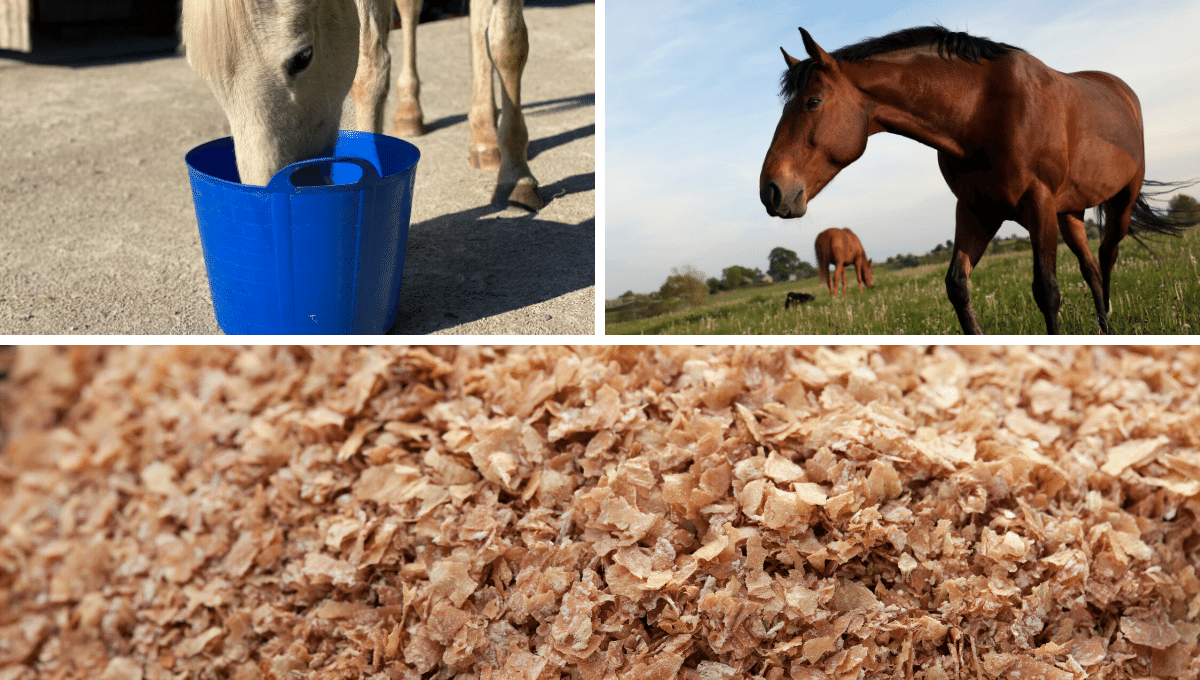
- Wheat Bran: Wheat bran is the outer layer of the wheat grain removed during milling. It is rich in magnesium, copper, zinc, and B vitamins, and contains an average of 17% protein. Produced by flour millers as a fine bran during the wheat milling process. High-quality, fresh bran products are valued for their nutritional benefits and natural origin. Wheat bran contains natural wheat germ goodness, with high essential fatty acids, which contribute to its nutritional value. Wheat bran also provides energy levels similar to oats but with significantly less starch. Its fibre content is about 10–15%, which is lower than that of hay, making it less effective as a primary fibre source unless mixed with high fibre bucket feeds.
- Calcium-to-Phosphorus Ratio: This refers to the proportion of calcium to phosphorus in the diet. Horses require a balanced ratio (ideally 1.5–2:1) for optimal skeletal health. Imbalances, especially excess calcium or phosphorus, can lead to health issues.
- Forage Analysis: Forage analysis is the laboratory assessment of hay, grass, or haylage to determine its nutrient and mineral content. This data-driven approach allows for precise balancing of the horse’s diet, ensuring all nutritional needs are met.
Nutritional Profile of Wheat Bran for Horses
Macronutrient Content
- Crude Protein: 15–20%, making it a useful addition for boosting protein in a horse’s diet.
- Fibre: About 10–15%, significantly less than that of hay, so it should not be relied upon as a primary fibre source.
- Starch: Moderate levels, lower than oats but still present, making it unsuitable for horses prone to laminitis or with metabolic issues.
Mineral Content
- Phosphorus: Relatively high (approximately 10–13 g/kg), which can be very useful to help balance high-calcium forages.
- Calcium: Low (typically <1 g/kg), resulting in a poor calcium-to-phosphorus ratio (about 1:10 to 1:12).
- Other Minerals: Good levels of magnesium, copper, and zinc.
- B Vitamins: High compared to hay/haylage.
Role in the Diet
Wheat bran’s defining characteristic is its high phosphorus relative to calcium content. While this has led to traditional caution, its inclusion can be beneficial when used to correct mineral imbalances in the total diet, particularly when forage and the daily bucket feed is high in calcium.
Phosphorus plays essential roles in:
- Skeletal mineralisation
- ATP and cellular energy metabolism
- Acid–base regulation
- Milk production
Understanding these nutritional characteristics is essential before considering how wheat bran fits into a horse’s overall diet.
Phytates in Wheat Bran and Their Effect on Calcium
Wheat bran contains phytates (phytic acid), which are the main storage form of phosphorus in cereal grains. Not all of this phosphorus is fully available to the horse because phytate binds minerals and reduces how easily they can be absorbed.
Phytate can bind to calcium in the digestive tract, forming complexes that reduce calcium absorption in the small intestine. Although hindgut microbes produce some phytase (an enzyme that helps break down phytate), calcium is mainly absorbed before feed reaches the hindgut. This means phytate can slightly reduce the amount of calcium the horse actually absorbs.
In practical terms, this is most relevant when calcium intake is already borderline low. However, in the UK, forage is commonly high in calcium (source Forageplus Forage Analysis Database). In these situations, the binding effect of phytate is unlikely to create deficiency but should still be considered when calculating the overall mineral balance of the diet.
As with phosphorus, the key point is that mineral interactions depend on the total ration. This is why forage analysis is desirable. It allows accurate assessment of calcium and phosphorus supply rather than relying on assumptions about individual ingredients.
With a clear understanding of wheat bran’s nutritional profile, it is important to consider how mineral balance and forage analysis influence its safe use in equine diets.
Why Forage Analysis Is Critical When Choosing Horse Feed
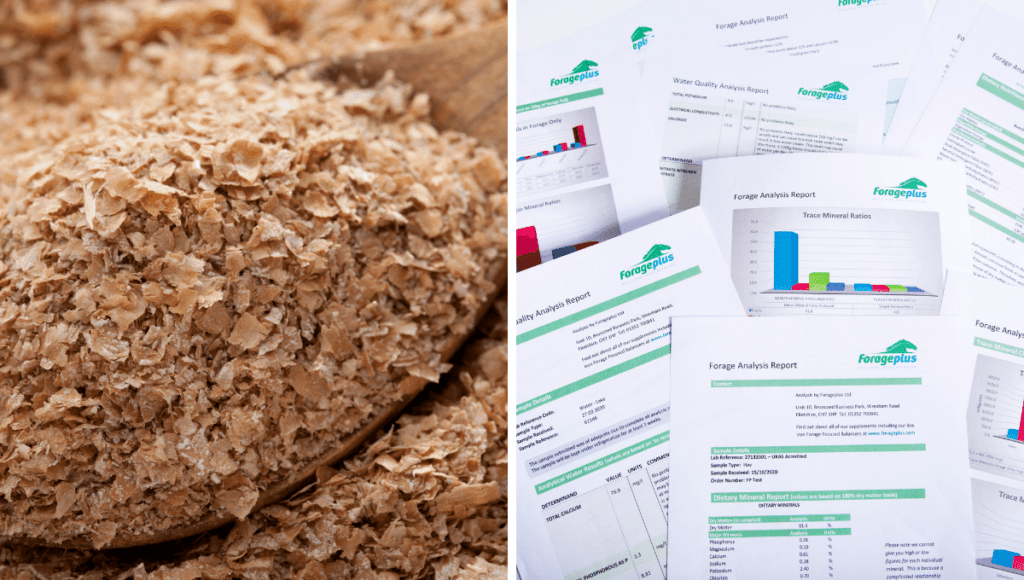
Mineral nutrition cannot be accurately assessed visually. Forage grown in the UK is heavily influenced by soil type, fertiliser history, land use history, and species composition. These variables frequently result in:
- Elevated calcium levels
- Inverted or exaggerated Ca:P ratios
- Marginal phosphorus relative to the requirement for breeding and young horses
Our forage database demonstrates that the blanket avoidance of wheat bran is often misplaced in UK conditions.
For young horses, pregnant mares in the last trimester, and lactating mares in particular, insufficient phosphorus relative to calcium may impair optimal skeletal development or milk mineral output if not addressed (NRC, 2007).
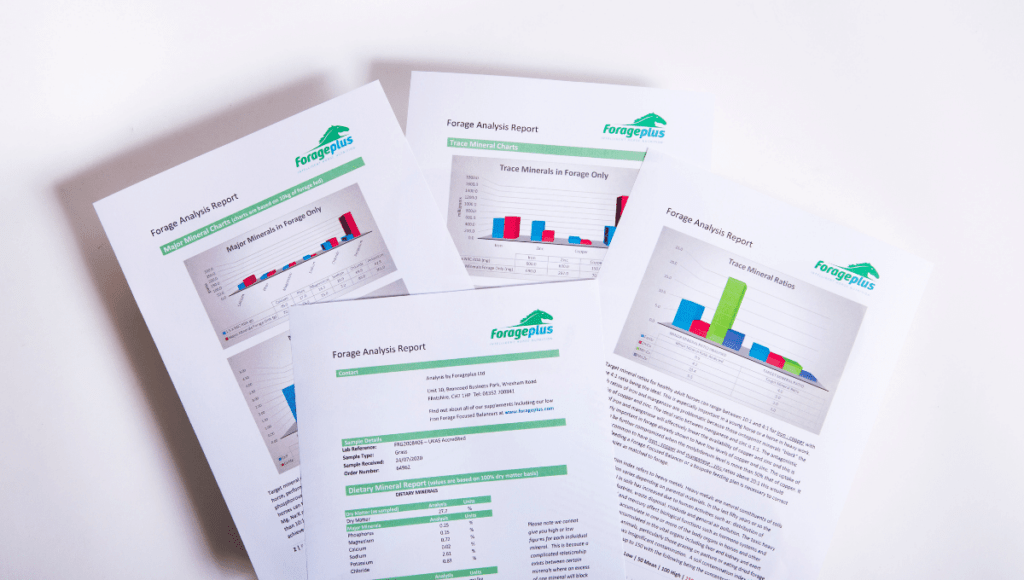
This is precisely where forage analysis becomes essential. A forage analysis allows you to find the calcium and phosphorus levels in your forage, such as grass, hay, or haylage, so you can make informed feeding decisions. Without analysis, feeding decisions are based on assumptions. With analysis, they are based on data.
With foundational knowledge of wheat bran’s nutritional profile and the importance of forage analysis, we can now explore the specific benefits wheat bran offers to horses.
What are the Benefits of Wheat Bran for Horses?
Wheat bran offers several advantages when used appropriately in the equine diet:
- Provides a good source of magnesium, copper, and zinc, as well as high levels of B vitamins compared to hay/haylage.
- Supplies moderate protein (15–17%), supporting muscle and tissue development.
- Offers a palatable feed option, making it an excellent carrier for supplements, especially for fussy eaters.
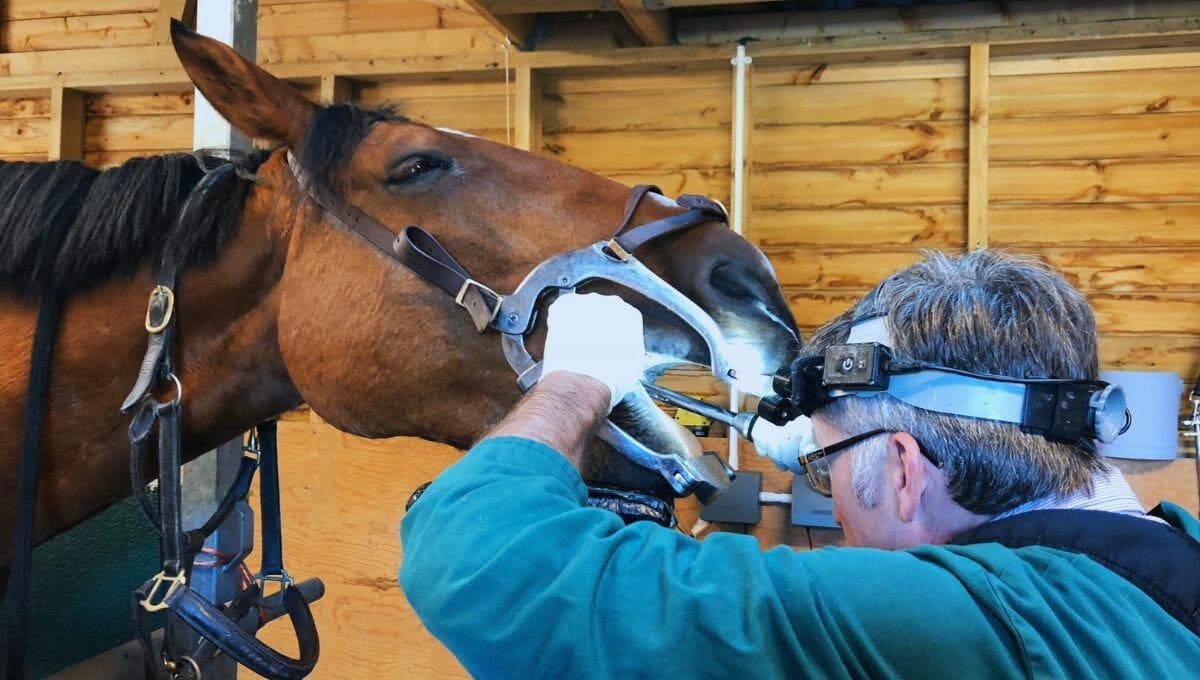
- It can be soaked into a mash, which is beneficial for horses with poor teeth or those requiring a soft feed.
- Increases daily water intake and provides a high-moisture meal.
- Contains fibre-bound antioxidants, which may contribute to gastrointestinal health.
- It can stimulate intestinal activity and help with constipation, making it useful for horses with digestive issues (but not for those with diarrhoea). Wheat bran can help encourage bowel movements.
- It is particularly useful for horses that need to gain weight, when added to fast soak fibre providers, as its high-calorie content supports horses looking to gain weight and improve body condition.
- When mixed with other feeds (e.g., grass nuts, alfalfa or beet pulp), it provides a calorie content similar to oats but with less starch.
While wheat bran has notable benefits, its use must be carefully managed to avoid risks associated with mineral imbalances and digestive upset.
Practical Horse Feeding Instructions for Wheat Bran
How to Prepare Wheat Bran
- Always mix wheat bran with warm water to create a mash, if feeding on its own, this prevents respiratory irritation and digestive issues.
- Best use: Mix with linseed, beet pulp, grass or hay pellets for an excellent, balanced bucket feed with added nutrition and palatability.
- Feed as a mash to support horses with digestive issues or those with poor dentition.
Safe Amounts and Frequency
- Maximum recommended daily amount: 1.5 grams per 1 kg of bodyweight per horse.
- Introduce gradually: Over 7–10 days to allow gut microbes to adapt and avoid digestive distress.
- Feed consistently: Ideally, as part of a daily routine to avoid shocking the digestive microflora.
- Frequency: Can be fed as part of a regimen or once or twice a week. But if a horse is constipated, then consider that the root cause is likely to be poor sodium in the diet. Consider 1 x 25 ml scoop of salt in the daily bucket feed instead to promote healthy drinking.
Contraindications
- Do not feed horses with diarrhoea as it may exacerbate their condition.
- Avoid overfeeding: Excessive or too frequent feeding can negatively affect intestinal flora and may have a laxative effect.
- Not a primary fibre source: Due to its lower fibre content compared to hay.
Key Points
- Wheat bran is palatable and can be used as a carrier for supplements.
- Feeding wheat bran increases daily water intake and provides a palatable, high-fibre, high-protein meal.
- Using with other separates creates a balanced profile for a bucket feed.
Safe Feeding Practices for Wheat Bran
To ensure the safe and effective use of wheat bran in your horse’s diet, follow these best practices:
- Moderation is key: Do not exceed 1.5 grams per kg of bodyweight per day.
- Gradual introduction: Introduce wheat bran over 7–10 days to help gut microbes adapt and avoid digestive distress.
- Consistency: Feed wheat bran as part of a daily routine to avoid shocking the digestive microflora.
- Monitor frequency: Feeding too frequently or in excessive amounts can negatively impact intestinal flora and may have a laxative effect.
- Not for horses with diarrhoea: Avoid feeding wheat bran to horses with diarrhoea, as it may worsen their condition.
- Not a primary fibre source: Due to its lower fibre content compared to hay, wheat bran should not replace forage as the main fibre source.
- Palatability and supplement carrier: Many owners face the problem of getting horses to accept mineral supplements due to taste or texture. Wheat bran is palatable and can help solve this problem by serving as an effective carrier for supplements, especially for fussy eaters.
- Hydration: Feeding wheat bran increases daily water intake and provides a high-moisture meal.
With safe feeding practices established, let’s explore how wheat bran can benefit specific groups of horses, such as young growing horses, breeding mares, and older horses.
Wheat Bran for Young Growing Horses
Growth is a mineral-sensitive process. Bone development depends not only on adequate calcium but on the correct calcium-to-phosphorus ratio. Excess calcium relative to phosphorus can be just as detrimental as deficiency (NRC, 2007).
Where forage analysis reveals elevated calcium and comparatively low phosphorus, controlled inclusion of wheat bran can help restore balance.
Additionally, young horses require sufficient dietary protein to support:
- Muscle accretion
- Connective tissue development
- Enzyme and immune function
Although wheat bran is not a high-quality lysine source compared to legume protein, it can contribute to overall crude protein intake when used alongside targeted amino acid balancing from other plant sources and supplements.
There are many instances where Forageplus creates feed suggestions for young horses, and supplementing the right amount of phosphorus in the total daily diet is impossible without the addition of high-phosphorus ingredients in the daily bucket feed. This is where the inclusion of wheat bran and other high-phosphorus feeds, such as Copra and oats becomes a smart targeted, bucket feed choice.
Wheat bran should be incorporated within a calculated feed contribution. The goal is not to just “add bran,” but to achieve the correct mineral ratio based on measurable data and smart feeding matched to grass and hay.
The same principles apply to mares in late gestation and lactation, where mineral and protein demands are even higher.
Wheat Bran for Late-Gestation and Lactating Mares
The final trimester of pregnancy and the early months of lactation represent the most nutritionally demanding phases of a mare’s reproductive cycle.
During the last trimester, approximately 60–70% of fetal growth occurs (NRC, 2007). This period is characterised by rapid skeletal mineralisation of the developing foal, making correct calcium and phosphorus supply critically important. It is not simply the absolute intake of these minerals that matters, but their ratio. An imbalanced calcium-to-phosphorus ratio during this high-development phase can compromise optimal mineral deposition and skeletal integrity in the fetus.
Where UK forage analysis reveals elevated calcium relative to phosphorus, a common finding in many regions, total dietary phosphorus intake may be marginal unless specifically addressed. In such cases, wheat bran can provide a controlled source of phosphorus to help align the overall Ca:P ratio within recommended parameters.
An added aspect to consider is how balanced the complete feeds are for horses. Without exception, the feed companies appear not to have awareness of the high calcium content of many horses’ forage and bucket feed here in the UK. They routinely add calcium as a supplement to their formulas, seeming to follow only the information that horses need more calcium than phosphorus. Whilst this is true, not paying attention to the patterns of mineral levels means that their feeds are not balanced, or rather, they are only balanced to themselves. This is not only true for stud mixes but also for adult horse compound feeds.
Following foaling, nutritional demand increases further. Lactation substantially elevates requirements for protein, energy and macro-minerals. Protein needs rise significantly to support milk synthesis, while phosphorus is secreted into milk and must be replaced through the diet to avoid depletion of maternal reserves (NRC, 2007).
Within a forage-led, separate-ingredient feeding system, wheat bran may contribute:
- Additional phosphorus to balance high-calcium forage
- Moderate protein to support late gestation and milk production
However, its inclusion must always be calculated within the total daily intake. The objective is precise mineral alignment during late gestation and adequate protein and mineral supply during lactation, not the routine addition of bran without data.
This is where forage analysis or formulas led by data from thousands of forage analyses becomes indispensable. Accurate mineral balancing during the last trimester and early lactation supports both maternal health and optimal skeletal development of the foal.
Older horses also have unique nutritional needs that wheat bran can help address.
Wheat Bran for Older Horses
Ageing horses often experience reduced digestive efficiency, lower voluntary intake and progressive muscle loss. Adequate protein intake becomes increasingly important to preserve lean mass (Ralston, 2001).
Wheat bran provides moderate protein and can be used with old horses as part of a diet which replaces part or all of the hay in the diet. Mixed with high calcium, fast soak feeds, such as beet pulp, grass or hay pellets, it improves calcium phosphorus ratios, protein levels, palatability and ease of consumption for horses with dental limitations.
However, its mineral contribution must still be evaluated. Even in elderly horses, Ca:P balance remains critical for skeletal maintenance and metabolic function.
To use wheat bran safely and effectively, it’s important to move beyond tradition and rely on data-driven feeding strategies.
Moving Beyond Tradition: A Data-Led Horse Feed Approach
Traditional Use vs. Modern Analysis
The historical criticism of wheat bran emerged largely from situations where it was fed without consideration of total mineral intake. Large, infrequent “bran mashes” could disrupt dietary balance and were not supported by nutrient analysis.
Forageplus Approach
At Forageplus, nutrition is built on:
- Analysed forage
- Clean carrier feeds
- Separate mineral balancing
- Individualised formulation
- Separation of calories, protein, mineral and vitamin requirements to target the best match of feed to grass and hay
This avoids reliance on generic “complete feeds” designed to suit average assumptions rather than measured data. Horses are individuals, and UK forage is highly variable.
A one-size-fits-all scoop approach using a complete mix cannot account for mineral ratios already present in forage or individual calorie versus nutrient needs.
When forage analysis demonstrates a need for additional phosphorus, wheat bran may be an effective component of a carefully structured ration.
Despite its benefits, wheat bran is not suitable for every horse or situation.
When Wheat Bran May Not Be Suitable For Horses
Wheat bran is not universally appropriate. Its starch content may make it unsuitable for horses with insulin dysregulation, equine metabolic syndrome or laminitis risk. We would not recommend its use with any horse that has insulin levels that are not under control and back in work which is at moderate to heavy.
It is not intended to replace forage or function as a bulk fibre source. Its role is corrective and supportive within a balanced ration.
To summarise, let’s review the key points and practical recommendations for feeding wheat bran to horses.
Conclusion
Summary of Key Points
- Wheat bran is neither inherently problematic nor universally beneficial.
- Its suitability depends entirely on the mineral profile of the forage and the physiological status of the horse.
- In the UK, where forage calcium levels are frequently elevated relative to phosphorus, wheat bran can be a critical dietary component for young growing horses and breeding mares when phosphorus intake is otherwise marginal.
- For old horses with teeth that mean that the bucket feed must be increased and hay replaced, wheat bran becomes a necessity. The hay and grass pellets available are all very high in calcium. When sugar beet is included in these feeds, then calcium levels rise even more, so including wheat bran to balance the overall nutrient profile is highly effective.
- Forage analysis provides the data required for accurate decision-making. Precision nutrition replaces assumption.
Practical Recommendations
- Use wheat bran as a targeted, data-driven supplement to correct mineral imbalances, not as a routine or bulk feed.
- When using it on its own, mix wheat bran with warm water to create a mash, especially for horses with dental or digestive issues.
- Introduce wheat bran gradually and feed in moderation, adhering to recommended daily amounts.
- Avoid feeding wheat bran to horses with diarrhoea or those at risk of metabolic disorders.
- Consult forage analysis and work with forage focused, equine nutritionists to ensure optimal dietary balance.
Far from ‘just’ being a by-product, bran turns out to be a high-nutritional-choice as long as it is used in a targeted, intelligent way. Our top tip is that although wheat bran may be old-fashioned, for those in the know, used in conjunction with a forage analysis and properly balanced to that forage, it can be a very valuable addition to the diets of many horses.
References
National Research Council (2007). Nutrient Requirements of Horses, 6th Revised Edition. National Academies Press.
INRA (2012). Equine Nutrition and Feeding Recommendations.
Ralston, S. (2001). Nutritional management of the geriatric horse. Veterinary Clinics of North America: Equine Practice.
FAQs: Wheat Bran for Horses
Is wheat bran safe for young horses?
Wheat bran can be safe for young horses when included in a diet that maintains an appropriate calcium-to-phosphorus ratio. Forage analysis is essential to determine whether additional phosphorus is required to balance high-calcium forage. It is useful when providing quality protein from a variety of plant sources to optimise the amino acid range.
Why was wheat bran traditionally discouraged?
Wheat bran was discouraged due to its high phosphorus and low calcium levels, which can disrupt mineral balance if fed without calculation. Modern forage-led nutrition allows it to be used strategically when needed.
Do UK horses need more phosphorus?
In many UK forage systems, calcium levels are elevated relative to phosphorus. Forage analysis frequently reveals Ca:P ratios above ideal levels. In these cases, additional dietary phosphorus may be required, particularly for growing horses and lactating mares.
Can wheat bran help balance high-calcium forage?
Yes. When forage analysis shows excessive calcium relative to phosphorus, wheat bran can contribute phosphorus to improve dietary balance, provided the final Ca:P ratio remains within recommended guidelines.
Can wheat bran help my horse gain weight?
Yes. When added to a bucket feed containing beet pulp, grass nuts and micronised linseed wheat bran helps boost calories in a concentrated palatable form. It also helps balance the calcium:phosphorus profile of the feed. It is a relatively cheap way to increase calories in a poor doers diet, and they love the taste.
Can I feed wheat bran to my laminitic horse or pony?
No. The starch content of wheat bran is not suitable for a laminitic horse or pony. An exception to this would be where it was fed with beet pulp to a horse with well-controlled insulin levels in moderate to hard work. Blood testing must confirm that insulin levels are well-regulated. In general, though, it is best avoided by owners who are managing EMS horses.
Is wheat bran suitable for pregnant and lactating mares?
Yes, because mares in the last trimester of pregnancy and lactating mares have increased phosphorus requirements due to milk production. Wheat bran can help meet these requirements when forage alone is insufficient, but it must be balanced carefully within the total feed intake. It can also help to boost calories in a concentrated form when the digestive system becomes less able to cope with volume due to the growing foetus.
Should I feed a complete feed instead?
Complete feeds are formulated for average scenarios and cannot account for the mineral composition of individual forage. A forage-analysis-led, separate-ingredient approach is superior and allows precise balancing tailored to the individual horse.
How much wheat bran should I feed to my horse?
Do not exceed more than 1.5 grams per kg of body weight per day. For a 500 kg horse, this means no more than 750 grams per day. To calculate the amount for your horse, use the formula 1.5 x body weight. This will give you the maximum amount in grams you can feed.
How do I safely feed wheat bran to my horse?
- Preparation: Mix wheat bran with other fast-soak fibre providers such as grass or hay pellets and beet pulp (Speedi-Beet or Kwik Beet). If you feed it on its own, add warm water to it to prevent respiratory irritation and digestive issues.
- Introduction: Introduce gradually over 7–10 days to allow gut microbes to adapt.
- Routine: Feed consistently as part of a daily routine, not sporadically, to avoid shocking the digestive microflora.
- Frequency: Can be fed as part of a regimen or once or twice a week (1.5 grams per kg of bodyweight).
- Contraindications: Do not feed to horses with diarrhoea or those with metabolic disorders. Avoid overfeeding to prevent negative effects on intestinal flora.
What are the signs that wheat bran may not be suitable for my horse?
- Loose manure or diarrhoea
- Signs of digestive upset
- Horses with insulin dysregulation, laminitis, or metabolic syndrome should avoid wheat bran due to its starch content.
- A forage analysis that is high in phosphorus compared to calcium.
Is wheat bran is high in protein?
Wheat bran averages 17% protein, so if you need to boost protein in the diet it can be a useful addition. It has good levels of both lysine and methionine, two essential amino acids which are usually short in the horse’s daily ration. Many UK horses are lacking in adequate protein, with hays and haylage commonly reporting under 6% protein. Where a horse is short of protein, using high protein feeds such as alfalfa, beet pulp and bran can introduce a useful boost to protein in the diet, and of course, you now know how to balance the wheat bran!
Is wheat bran is high in calories?
The calorie level of wheat bran is equal to oats, but where oats have a starch level of around 40%, wheat bran comes in at less than half that. For a starch-sensitive horse in hard work or a horse needing to gain weight, using a proportion of bran can be a useful strategy.
Do horses love the taste of bran?
Another benefit is bran’s palatability. Horses just love the taste and smell of wheat bran and where you have a fussy horse which won’t eat supplements then it makes an excellent carrier if used in a small amount.
A mash of 50:50 wheat bran and alfalfa or 25:75 bran and beet pulp has a calorie content roughly equivalent to the same weight of plain oats but only 1/4 to 1/2 as much starch. The appealing aroma and taste of bran make it an excellent carrier for supplements.
Dr. Eleanor Kellon VMD.