In this series of episodes of Talk Horse To Me, Sarah delves into one of the most powerful frameworks shaping modern equine welfare: the Five Domains model, first introduced by animal welfare scientist Professor David J. Mellor.
This concept shifts how we understand welfare, moving beyond the old “Five Freedoms” and focusing on how horses actually feel in their daily lives. The relevance of this model cannot be overstated, especially in a world where horse welfare is often treated superficially. Understanding the complexities of equine emotions and their responses to various stimuli is essential for every horse owner and enthusiast.
By embracing the Five Domains model, we can foster a deeper connection with our horses, ensuring they lead not just a life of survival but one filled with joy and purpose.
What Are the Five Domains?
The Five Domains framework helps us see horse welfare through a holistic lens. It explores how every part of a horse’s life, nutrition, environment, health, behaviour, and finally, mental state, connects to their overall wellbeing. Each domain plays a role, contributing to a horse’s quality of life. For instance, poor nutrition can lead to health issues that affect behaviour, while a rich environment can enhance mental wellbeing, demonstrating the interconnectedness of these domains.
In each episode Sarah explores the practical applications of each area of the Five Domains model, offering her expert opinion and real-world experience to illustrate how changes in each domain can lead to significant improvements in horse welfare. These insights are beneficial not only for horse owners but also for trainers, veterinarians, and anyone involved in equine care.
The series will consider the implications of neglecting any one of these domains. A horse with a deficient diet might become lethargic or irritable, while one kept alone in a stressful environment may become unpredictable, or develop stereotypic behaviours such as weaving or cribbing.
Conversely, a well-rounded approach that addresses each domain can develop horses that exhibit vitality, playfulness, confidence and overall contentment; embodying true equine happiness.
While each domain is vital, it’s the mental state that sits at the centre, influenced by everything else. When we support good nutrition, provide a healthy environment, encourage natural behaviours, and manage health proactively, we create horses who are not just surviving, but thriving.
You can read more about the origins of this model in Mellor’s landmark paper, The 2020 Five Domains Model: Including Human–Animal Interactions in Assessments of Animal Welfare, which forms the scientific foundation for today’s welfare approaches.
Building Better Horse Welfare, One Domain at a Time
This series delves into common misconceptions surrounding equine welfare and provides evidence-based insights that can empower owners to make informed decisions. By addressing topics such as forage and pasture quality, environmental enrichment, and the importance of social interactions, the series aims to equip listeners with the tools necessary to implement possible changes to enhance their horses’ lives.
Ultimately, our goal is to foster a community of informed equestrians who prioritise the welfare of their horses. Understanding the Five Domains model is just the beginning; it opens the door to a wealth of knowledge that can transform how we perceive and care for these magnificent animals.
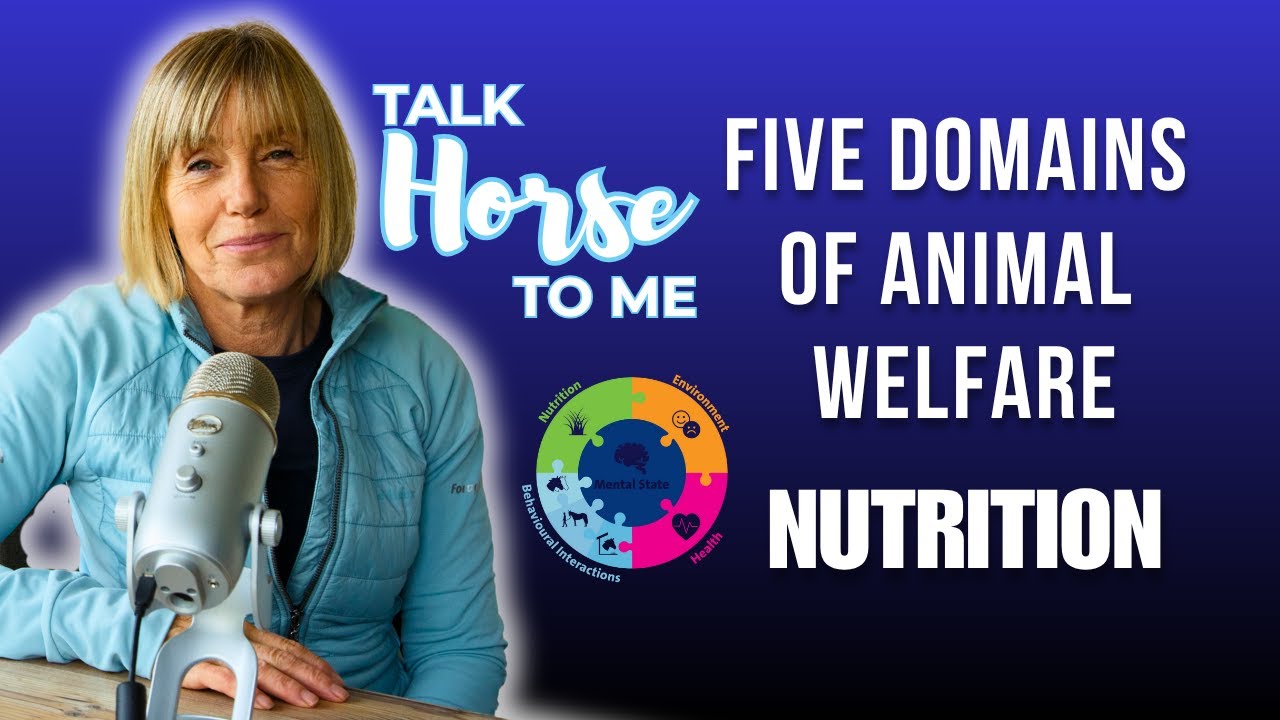
Nutrition: The Foundation of Horse Welfare
In Episode 1 of Talk Horse To Me, it is an invitation to look deeper at the science of horse welfare, and to see forage focused nutrition not as a trend, but as the quiet, powerful foundation of wellbeing. Nutrition is the first of the five domains because it’s the cornerstone of every other aspect of welfare.
After more than 25 years in the equine industry, and through the work we do at Forageplus, Sarah has learnt that true horse health starts with understanding what’s in the forage. Hay and grass aren’t just filler; they’re the foundation of the diet. Yet most UK forage samples are low in protein, leading to over weight horses, and imbalanced in minerals such as phosphorus, magnesium, sodium, copper and zinc.
When a horse’s diet is based on data, through forage analysis, everything changes. Muscles develop properly, hooves strengthen, digestion improves, and behaviour becomes calmer. Nutrition doesn’t just affect the body; it directly shapes how a horse feels.
That’s why the Five Domains framework makes so much sense; it reminds us that a horse’s mental state is linked to everything from what’s in their bucket to how they experience their environment and us!
Environment: Shaping the Horse’s Body and Mind
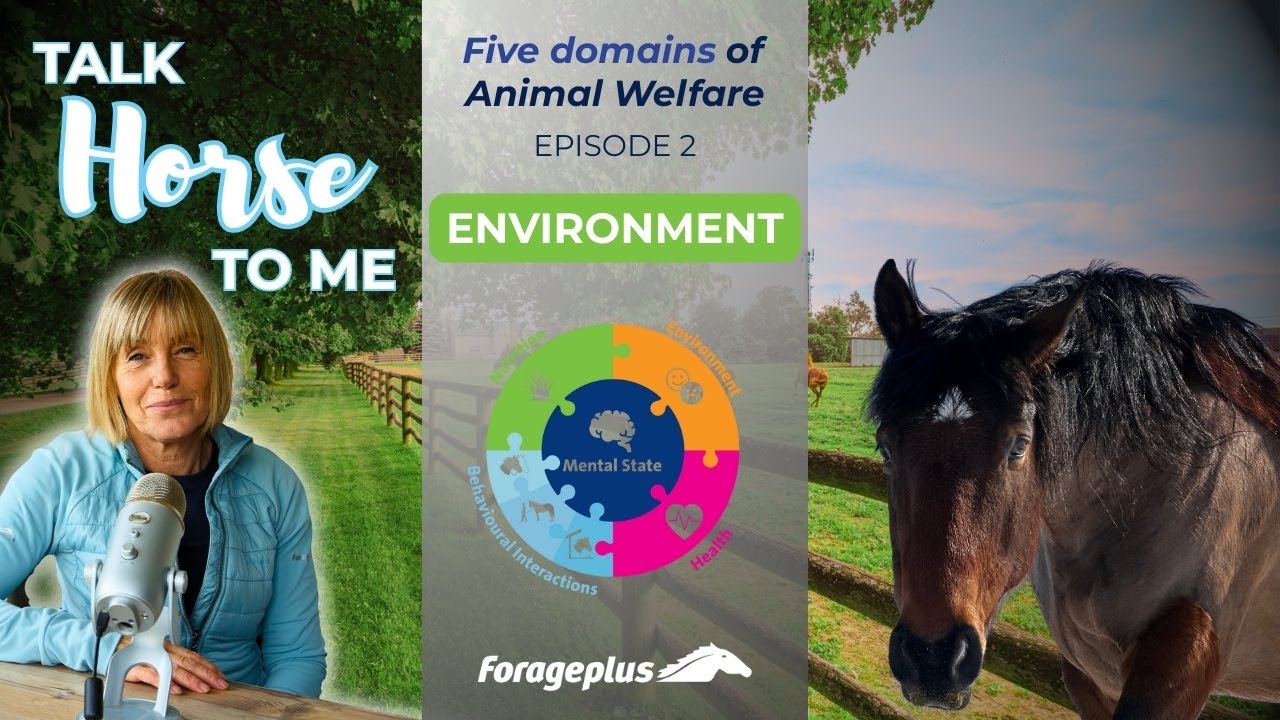
In Episode 2 of Talk Horse To Me, Sarah explores the Environment Domain of the Five Domains of Animal Welfare, developed by David Mellor.
This domain asks a powerful question: how does the horse experience the world we ask them to live in? From air quality and space to surfaces, shelter, weather exposure, and social contact, the environment shapes not only the horse’s body and behaviour, but their emotional and mental state.
Horses evolved to move, graze, socialise, and make choices. Yet modern horse management often restricts these natural behaviours through stabling, small paddocks, isolation, and rigid routines. In this episode, Sarah unpacks how these environments, even when considered “normal”, can quietly contribute to stress, anxiety, respiratory issues, stiffness, and so-called “behaviour problems” that are actually signals of unmet environmental needs.
Drawing parallels with modern zoo welfare, where environments have been redesigned to support species-appropriate behaviour and psychological wellbeing, this episode challenges the horse world to catch up. If zoos can transform the lives of elephants and big cats, what does that mean for a grazing, herd-living prey animal like the horse?
With more than 20 years of exploring using horse track systems, open shelters, and grazing cells, Sarah offers practical, realistic guidance for horse owners, including those on livery yards, showing how small changes can make a meaningful difference. From encouraging movement and social contact to improving air quality, surfaces, and choice, Sarah explains how welfare gains don’t require perfection, just awareness and intention.
Understanding the Environment Domain is a vital step in improving horse welfare under the Five Domains framework, which is now being adopted by major equine organisations worldwide, including World Horse Welfare and The British Horse Society. If you’ve addressed nutrition and are still seeing issues with stress, behaviour, or health, this episode asks a crucial question: what if the problem isn’t the horse, but the environment they’re living in?
Coming soon, more horse welfare episodes
Subscribe to the podcast either on YouTube or through your usual podcast player. Join us on the journey to explore each domain in depth and discover how we can all contribute to a healthier and happier equine world.
This journey is not merely about addressing problems as they arise but about creating an environment that nurtures the horse’s physical and mental health. By focusing on the Five Domains, we can ensure that each horse receives the comprehensive care they deserve.
Over the coming episodes, Sarah will explore each domain, from environment to behaviour, with the goal of helping every horse owner make informed, compassionate choices grounded in evidence.
Because when we talk horse, we can do better for true whole horse welfare.
Useful Resources:
World Horse Welfare: The Five Domains of Animal Welfare
British Horse Society: Horses in Society
Horses and People: Download free infographics for your yard or barn